
Introduction to Safe Towing
Towing a trailer safely is a skill that goes beyond just hitching it to your vehicle. One of the most critical aspects, often overlooked, is proper weight distribution. Incorrect loading can lead to dangerous instability, reduced braking performance, and increased wear on both your trailer and tow vehicle. Understanding how to distribute weight correctly is not just about avoiding potential hazards; it\'s about ensuring a smooth, predictable, and safe journey every time you hit the road. This guide will walk you through the essential principles to achieve optimal balance.

Understanding Trailer Tongue Weight
The cornerstone of safe trailer loading is managing "tongue weight," which is the downward force exerted by the trailer\'s tongue onto the tow hitch. For most conventional trailers, the ideal tongue weight should be between 10% and 15% of the total loaded trailer weight. Too little tongue weight can cause the trailer to sway violently ("fishtail"), making it uncontrollable, especially at higher speeds. Conversely, too much tongue weight can overload your tow vehicle\'s rear suspension, affecting steering, braking, and tire wear. Always use a tongue weight scale or visit a weigh station to verify this crucial measurement after loading.
Centering Your Heaviest Items
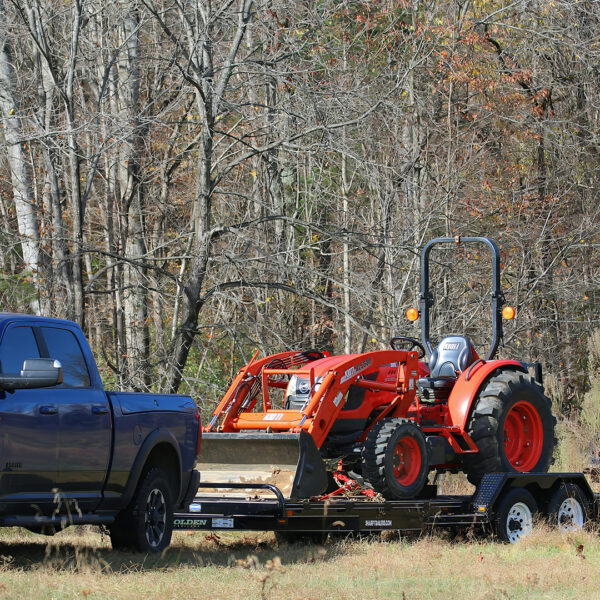
The golden rule for loading any trailer is to place the heaviest items over or slightly forward of the trailer\'s axle(s). This centralizes the mass, preventing extreme tongue weights and minimizing rotational inertia during turns. Imagine the trailer as a seesaw; if all the weight is at one end, it\'s difficult to balance. By positioning heavy objects centrally, you create a more stable pivot point. Secure these items firmly to prevent shifting during transit, which could drastically alter weight distribution and cause immediate instability.

Distributing Remaining Weight Evenly
Once your heaviest items are secured, distribute lighter cargo to balance the load from side to side and front to back. Avoid stacking items too high, as this raises the center of gravity and can increase sway. If you have multiple axles, distribute the weight across them as evenly as possible. Always ensure that the overall weight of your loaded trailer does not exceed its Gross Vehicle Weight Rating (GVWR) or your tow vehicle\'s maximum towing capacity. Overloading can lead to tire blowouts, brake failure, and structural damage.
Final Checks and Adjustments
Before every trip, conduct a thorough inspection. Check tire pressure on both the tow vehicle and trailer (including the spare), ensure all lights are functional, and confirm that all cargo is securely fastened. Drive slowly for the first few miles to feel how the trailer handles. If you notice any excessive sway or handling issues, pull over safely and reassess your load. Making small adjustments can significantly improve safety and towing comfort. Proper weight distribution is an investment in your safety and the longevity of your equipment.
Ready to Tow with Confidence? Find Your Next Trailer Now
Mastering trailer weight distribution is fundamental to safe and efficient towing. By understanding tongue weight, centering heavy items, and distributing the rest evenly, you can significantly mitigate risks on the road. For more expert advice on trailer maintenance, loading techniques, or to explore our range of trailers designed for optimal balance and durability, visit Super Star Trailers. Our team is ready to help you tow with confidence.